Repair cost library
Aftertreatment Repair Cost
Aftertreatment repair costs range widely because a sensor, DEF quality issue, DPF cleaning, SCR component, wiring problem, or derate event can all look similar at first.
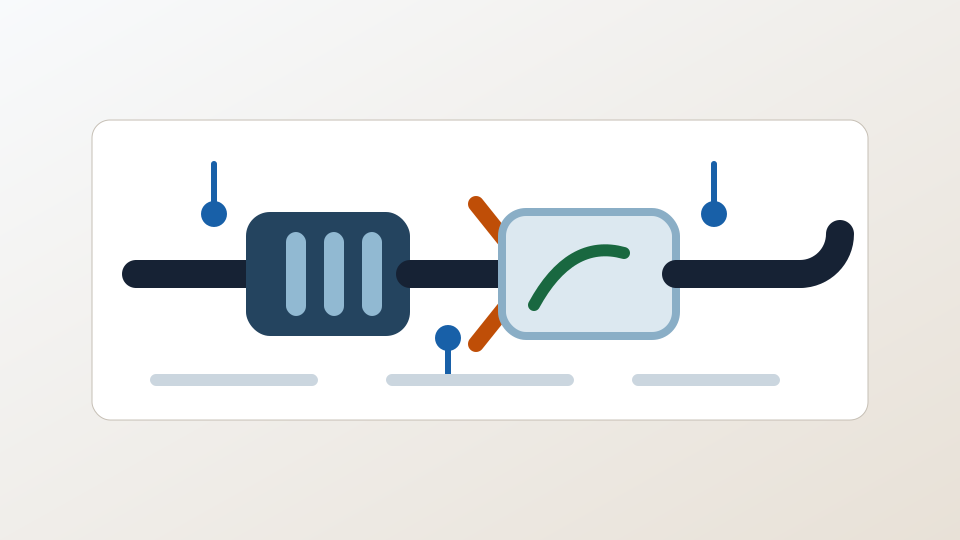
For cash planning, compare this range with the repair reserve calculator, save invoice details in the truck repair log template, and review the cost methodology before treating any number as a quote.
When This Estimate Is Useful
- Use this aftertreatment repair cost range for owner-operator reserve planning before the invoice arrives.
- Use it as a shop quote comparison checklist so parts, labor, diagnostics, and add-ons are not mixed together.
- Use it during PM planning or used-truck review when a defect could affect dispatch, inspection readiness, or purchase risk.
| Line item | Planning range | Notes |
|---|---|---|
| Total planning estimate | $450 - $9,000 | Planning range only. A written shop estimate should list parts, labor, diagnostics, supplies, taxes, and core charges. |
| Diagnostics and shop supplies | $80 - $350 | Often billed separately from parts and core labor. |
| Downtime exposure | $0 - $1,200 | Not a shop charge. Use for cash-flow planning if the truck sits. |
Parts vs. Labor Breakdown
| Line item | Planning range | Notes |
|---|---|---|
| Parts and materials | $150 - $6,500 | Varies by OEM, aftermarket availability, reman options, and core policy. |
| Labor | $300 - $2,500 | Estimated using common labor-hour assumptions and heavy-duty shop labor-rate ranges. |
What Affects the Cost
- DPF, DOC, SCR, DEF dosing, sensors, wiring, and software diagnosis.
- Whether the truck is in derate and needs towing.
- Root cause such as coolant, oil, fuel, or turbo contamination.
- Labor planning is checked against a $110-$185 per hour shop-rate band, but emergency or metro work can move higher.
- Related damage found during teardown, inspection, scan-tool testing, or post-repair road testing.
Symptoms or Warning Signs
- Check engine light
- Derate
- Frequent regen
- DEF quality codes
- High soot load
Can You Keep Driving?
Aftertreatment derates can limit speed and power. Continuing without diagnosis may increase tow risk and component damage.
Regional Cost Variation
Use this as a U.S. planning range, not a local quote. Dealer labor, mobile service, high-cost metro markets, corrosion, parts freight, and emergency scheduling can move a repair above the middle of the range, while routine PM work in a lower-cost market may land closer to the lower side.
Questions to Ask the Repair Shop
- Which subsystem is actually being repaired: DPF, DOC, SCR, DEF dosing, NOx sensors, wiring, software, or exhaust leaks?
- What diagnostic tests separate a failed component from DEF contamination, soot loading, coolant contamination, or upstream engine problems?
- Is the truck in derate, and does the estimate include towing, mobile diagnostics, forced regen, or programming?
- Are sensor replacement, harness repair, DPF cleaning, DEF quality testing, and post-repair verification separate line items?
- What fault-code history and freeze-frame data will be attached to the invoice?
- What result proves the derate or regen complaint is resolved before the truck goes back to work?
What to Record in Your Maintenance Log
- Date, odometer, engine hours if available, unit number, and driver complaint.
- Aftertreatment Repair Cost diagnosis, fault codes or inspection findings, and why the shop chose repair, cleaning, rebuild, or replacement.
- Parts installed, part numbers when available, labor hours, invoice total, taxes, core charges, and warranty terms.
- Photos, scan reports, oil or coolant notes, pressure readings, or road-test notes when they explain the repair.
- Next inspection, retorque, PM, cleaning, or service follow-up triggered by the repair.
Methodology Note
Related repair costs and tools
Sources and Methodology
- Federal Motor Carrier Safety Regulations, Part 393 - Equipment safety rules used as a reference point for inspection-sensitive systems such as brakes, lamps, coupling devices, and tires.
- Federal Motor Carrier Safety Regulations, Part 396 - Maintenance, inspection, repair, and recordkeeping requirements for motor carriers.
- Diesel Service Technicians and Mechanics - Used for labor-market context around diesel service work. It is not treated as a shop labor-rate schedule or repair-price source.
- Parts plus labor planning methodology - Internal method: estimate likely parts range, labor hours, shop rate, fluids, shop supplies, diagnostics, downtime, and regional variation.
- Shop labor-rate planning band - Internal planning band for comparing labor-hour assumptions against a broad U.S. heavy-duty shop-rate range. Users should replace it with their local written shop rate when available.
- Regional variation and quote comparison policy - Cost ranges are kept conservative when dealer labor, mobile service, metro pricing, corrosion, parts freight, diagnostics, or emergency scheduling may change the invoice.